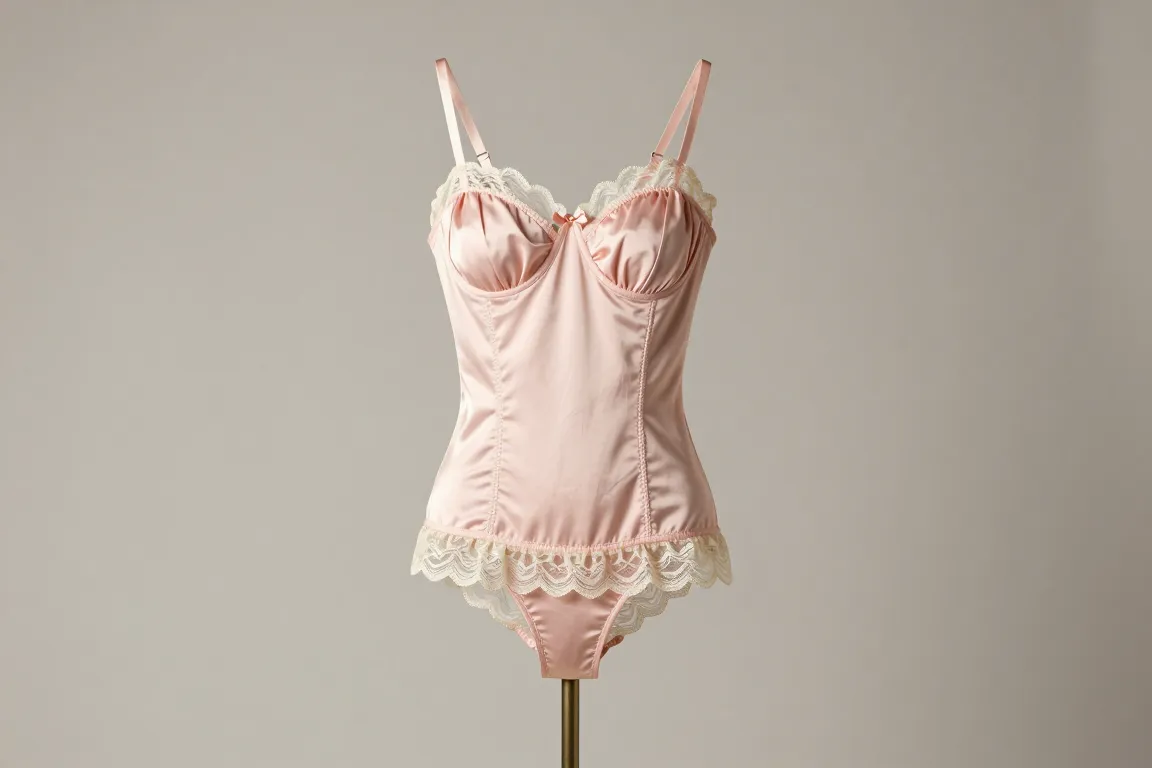
The first modern brassiere: a light, unboned band or two cups of silk, cotton and lace, tied at the back. It replaced the corset above the waist and then flattened the bust for the 1920s dress.
Core thesis
The body needs a light band, not a cage: a soft brassiere carries the bust and leaves the waist free for the new, loose dress.
Design principles
Make the brassiere of two small panels joined at the centre front by a short strip.
Leave out all bone and steel; hold the shape with the cut and with a tape.
Tie or hook the band at the back, and set it low enough to leave the back bare.
Cut the band 12 to 20 cm deep, so that it covers the bust and no more.
Make the body in fine cotton, silk or crêpe de Chine, and trim the edge with lace.
Fasten the straps with narrow ribbon, tied at the shoulder.
From 1920, cut the band flat to press the bust level with the chest.
Anti-patterns
A long boned corset with a busk
Cups of nylon or elastic stretch cloth
A wired, padded cup of the later twentieth century