Bias-cut glamour
fashion · 1927–1939 · also: Bias-cut gown, Vionnet cut, 1930s Hollywood gown
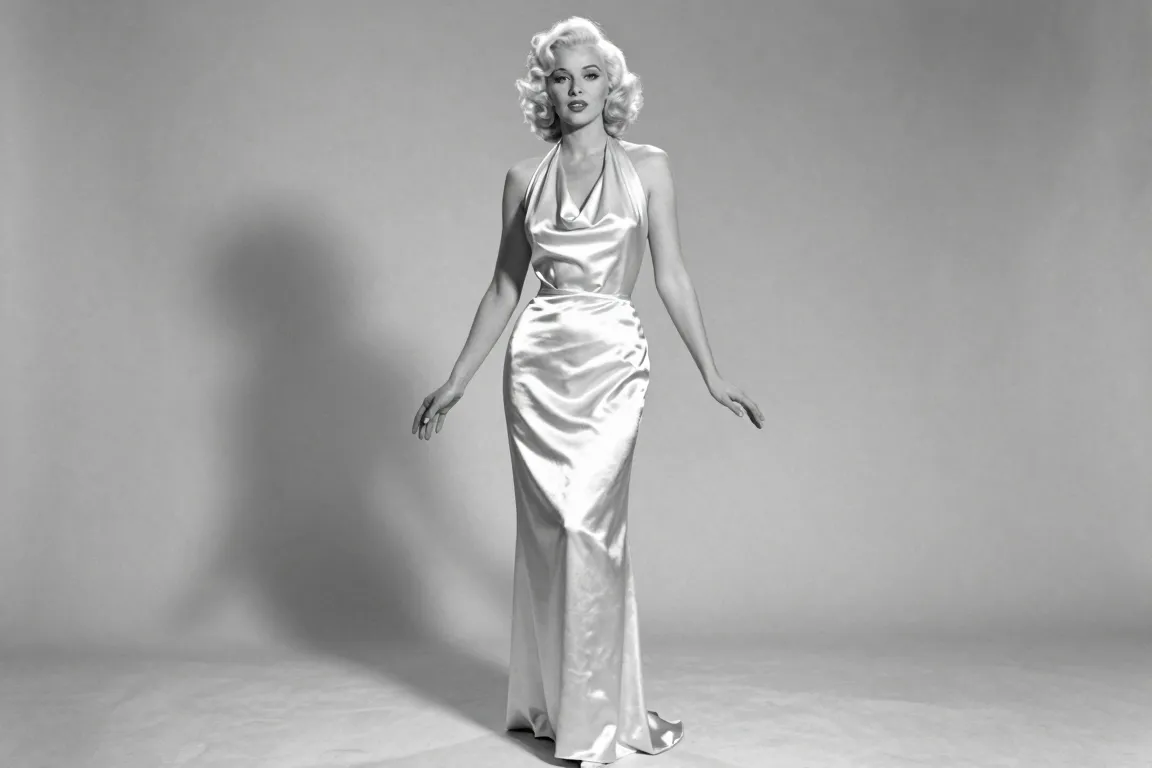
The long, close evening gown of the 1930s: silk satin cut on the cross grain, so that it drapes and follows the body.
Core thesis
Silk cut across the grain drapes by itself, so that the body shows a line with no boning and no pads.
Design principles
- Cut the cloth at 45 degrees to the grain, so that it stretches up to 20 per cent.
- Drape the pattern on a small wooden doll, 80 cm high, before the full-size cut.
- Keep seams to a minimum: a gown needs two to four main pieces.
- Let the waist return to the natural line, and let the gown run in a smooth curve over the hip.
- Hang the skirt for 24 hours before the hem is sewn, so that the bias settles.
- Choose a heavy crêpe or a satin of 70 to 100 g per square metre.
- Finish with a cowl neck, a low back or a halter, and no other trim.
Anti-patterns
- A boxy 1920s tube with a low waist
- Stiff boned bodices and petticoats
- Cloth cut on the straight grain
- A heavy beaded surface
- Thick, ribbed or napped cloth
- A short, cropped hem line
Palette
Lineage
- Echoes
- Art Deco, Classical Hollywood
- Evolved from
- Garçonne and flapper dress
- Evolved into
- Minimalist fashion
- Hybridises with
- Retro Cocktail Jewellery
Use it
SKILL.md · tokens.css · source JSON · open in the demo