ceramics · 1570–1644 · also: Kraakware, Wanli export porcelain, Chinese export blue and white
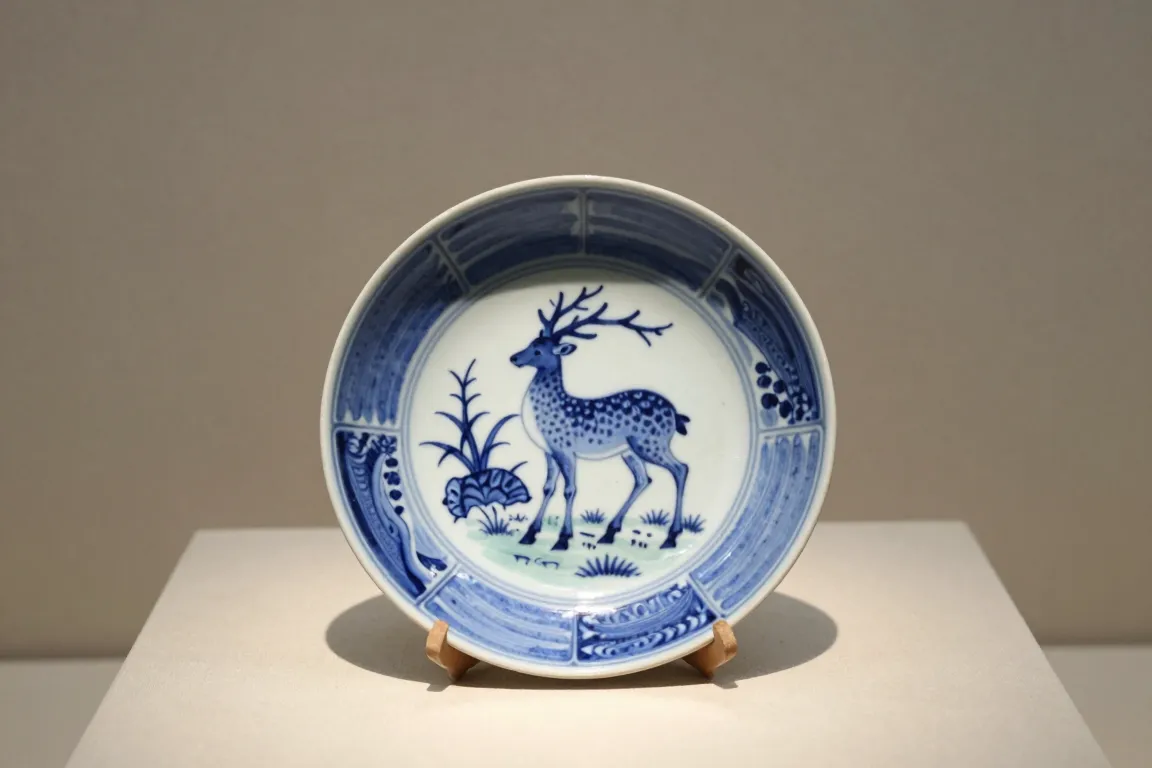
Thin blue-and-white export porcelain from Jingdezhen. Plates and bowls have a rim in 8 panels that frame plants and sacred objects, and a central scene. Merchants of Portugal and the Netherlands sold it across Europe.
Core thesis
One cobalt blue on a white porcelain body, ordered in panels that a quick painter can repeat, makes a pattern that a whole continent wants to buy.
Design principles
Divide the rim into 8 panels, in turn broad and narrow, and fill each with a plant, a jewel or a precious object.
Paint a single scene in the well: a bird on a rock, a deer, or a vase of flowers.
Paint the cobalt under the glaze with a loaded brush, and shade the blue with a pale wash.
Throw the porcelain very thin, with a wall 2 to 3 mm thick, so that it is light and translucent.
Use a clear glaze with a slight blue-grey tone and fire the dish in a wood-fired kiln.
Leave the edge of the rim with a thin brown iron line, where the glaze runs thin.
Pack the plates in stacks of 20 or more for the ship; a set is of one size and one pattern.
Anti-patterns
A thick opaque white tin glaze on an earthenware body
A printed pattern with even hard lines
Red, green or gold enamel over the glaze
A deep, rich blue like the ware of the 18th century