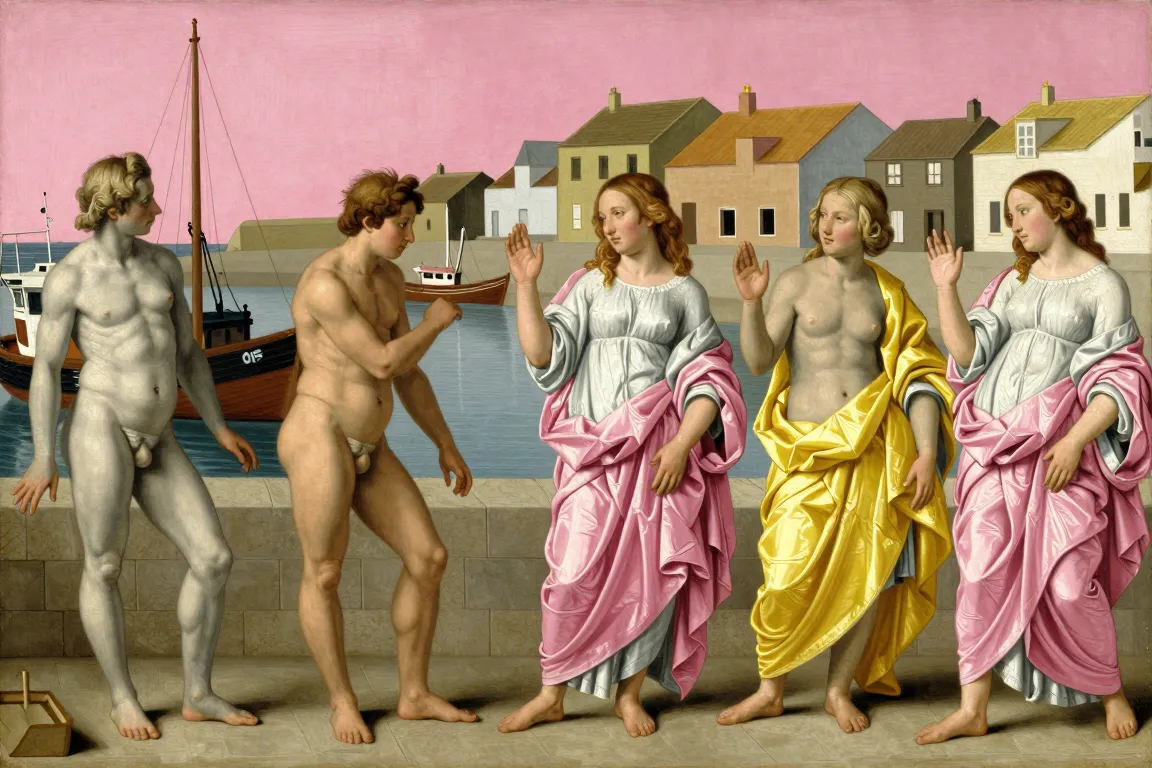
painting · 1520–1600 · also: Late Renaissance, Maniera
Elongated, twisting figures in crowded, unstable space, in acid colour. The painters took the Renaissance rules and bent them on purpose: grace and artifice replace calm balance.
Core thesis
A picture is most beautiful when it shows skill and invention, so the painter stretches, twists and crowds the ideal body past nature.
Design principles
Draw the figure 9 to 10 heads tall, with a small head and long limbs and neck.
Twist each figure in a serpentine line (figura serpentinata) that spirals up through 180° or more.
Fill the picture to the edges with 5–15 figures, and leave no calm floor to stand on.
Tilt the space: raise the horizon and push the ground up the picture plane so that figures climb and stack.
Use acid, shifting colour: a cold pink, lemon, green and blue that change hue inside one drape (cangiante).
Light the figure from a cold, unclear source, and keep the faces smooth and enamel-like.
Put the main action off to one side or far back, and place a large decorative figure in front.
Anti-patterns
Calm, symmetric balance around a central axis
Figures of natural proportion, 7 to 8 heads tall
Clear, deep perspective with an open floor
Warm, earthy colour that stays one hue in each drape