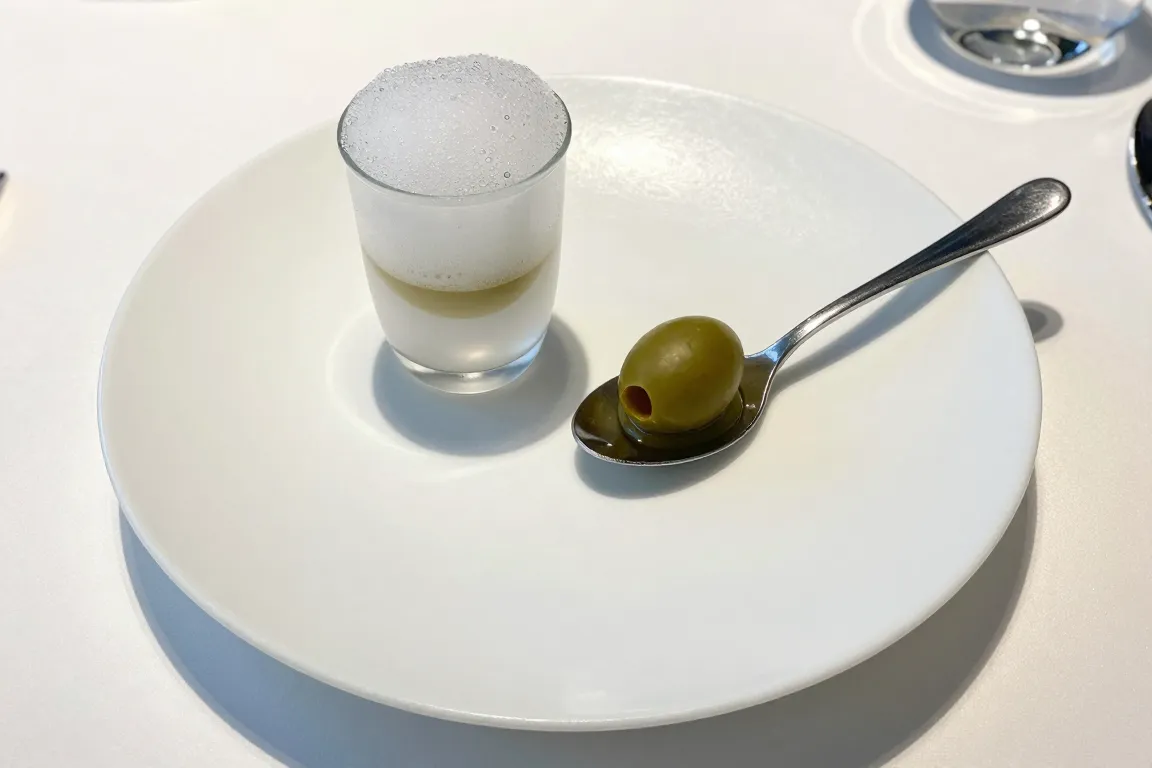
A kitchen that uses the science of food as a tool and a game. Hervé This and Nicholas Kurti named the field in 1988. Ferran Adrià at elBulli and Heston Blumenthal at The Fat Duck made foams, spheres and liquid-nitrogen ice cream.
Core thesis
Cooks can ask why food changes when it is heated, mixed or frozen, and then use the answer to build new textures, temperatures and surprises.
Design principles
Ask a physical or chemical question about a dish, test it in the kitchen, and keep the answer.
Change the form of the ingredient: a liquid becomes a sphere, a purée becomes a foam, a cream becomes a powder.
Keep the taste of the ingredient clear while its texture and temperature change.
Play with the senses: serve hot and cold in one bite, and add sound, smell or a story to the dish.
Cook slowly at an exact low temperature, and measure the heat with a probe.
Serve a long sequence of small courses as one show, with each course a new surprise.
Work in a research kitchen, record each test, and share the findings.
Anti-patterns
A trick that has no taste of the ingredient
A heavy classic sauce that hides the texture
A dish that comes from habit, not from a question
A menu of familiar courses in the usual order
A rustic plate that hides the technique
A chemical effect that the guest cannot see or taste