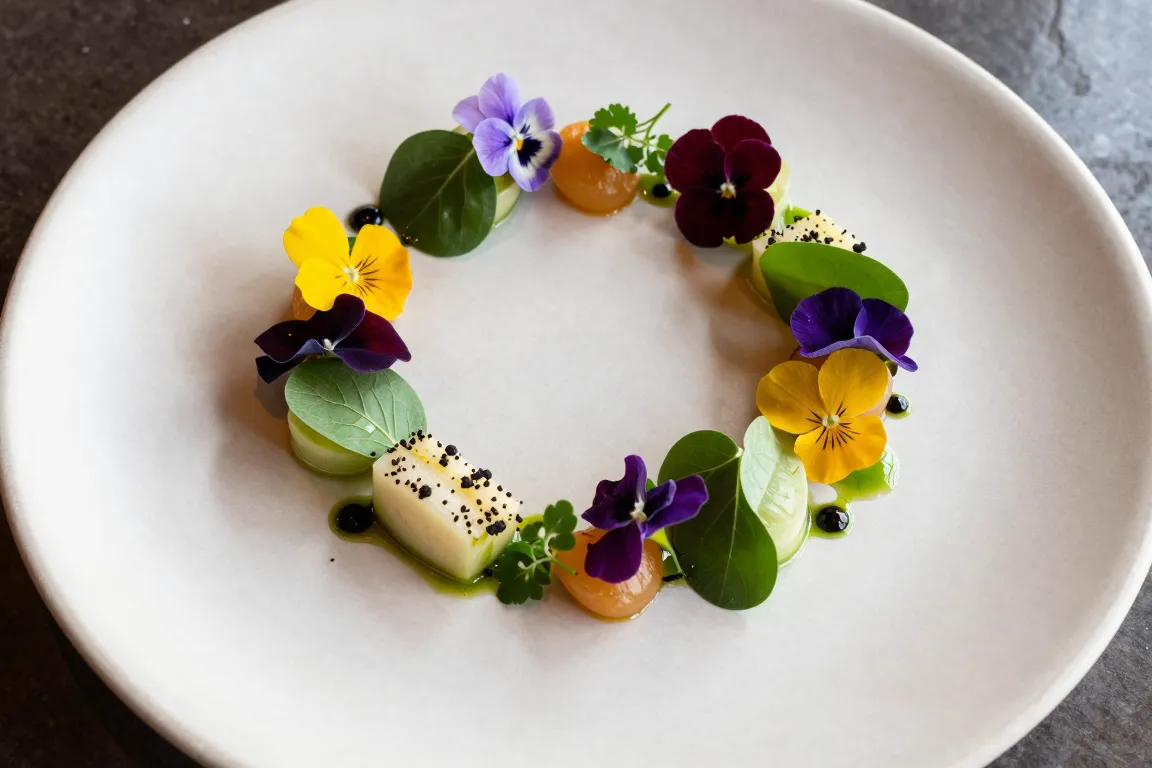
cuisine · 1978–present · also: Cuisine naturaliste, Cuisine of the plateau, Garden and wild-plant cuisine, New wild cuisine
A kitchen that treats the plate as a landscape. The cook picks wild and garden plants on the day, cooks each one at its own pace and shows it whole. The gargouillou of Michel Bras, first made in 1980, holds dozens of plants.
Core thesis
The land around the kitchen is the pantry and the teacher: the cook walks it, learns each plant in each week, and cooks only what the walk gives.
Design principles
Pick wild herbs, flowers, roots and mushrooms on the day, and write the menu after the walk, not before it.
Cook each plant by itself, to its own point, and join the parts only on the plate.
Keep the plant in its natural form: the leaf, the flower, the root with its shape.
Let vegetables, grains and pulses carry the plate; use meat, fish and dairy as a small part of it.
Use butter, oils and light stocks to carry the taste of the plant, not to cover it.
Think of the plate as a small landscape: scatter the parts in a loose, uneven order, as plants grow.
Make the sauce a thin pool or a dot that gives acid or bitterness to the plants.
Anti-patterns
A heavy cream or butter sauce that covers the plant
A fixed menu that does not change with the week
A plate with a strict centre and a symmetric garnish
Luxury goods such as caviar and foie gras used for their price
Imported ingredients when a local plant is in season
Laboratory gels and foams as the point of the dish