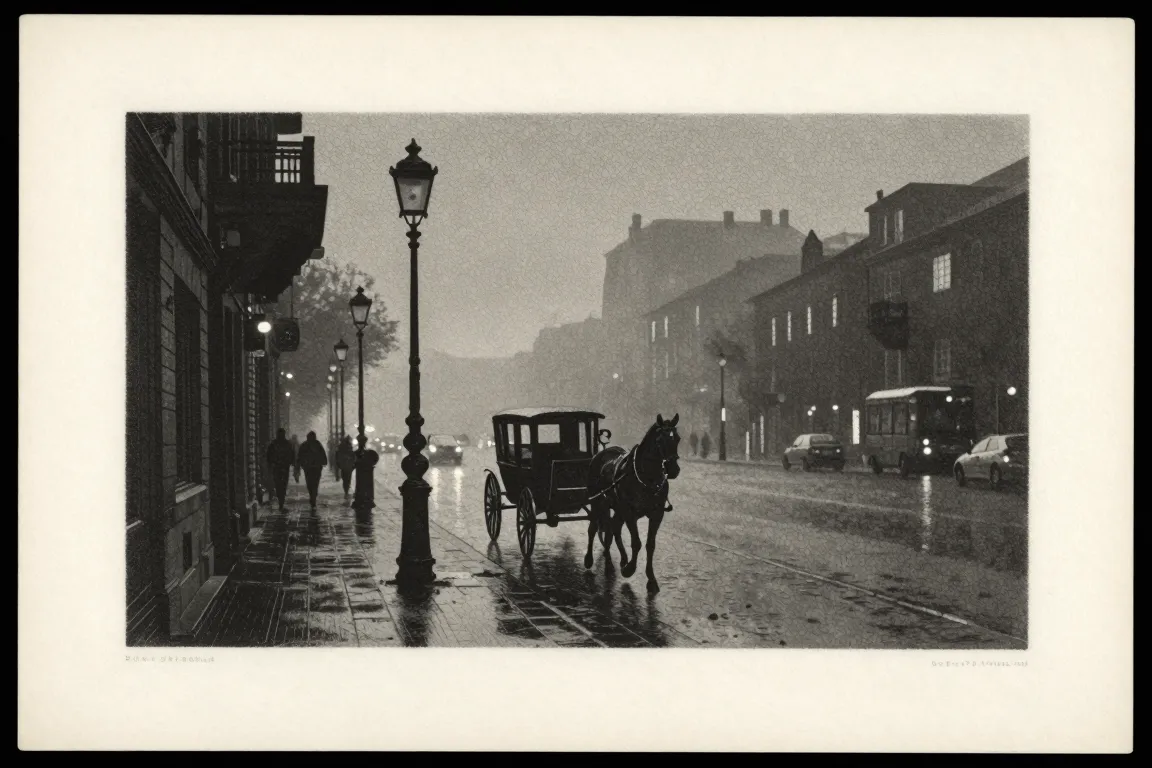
A carbon-tissue positive is transferred to a copper plate, which is etched through a dusted aquatint grain. The plate prints continuous photographic tone as deep, rich ink on thin tissue, with no visible screen.
Core thesis
A photograph etched into copper through an aquatint grain prints as continuous tone in a deep ink. The photograph then reads as an original print.
Design principles
Expose a carbon tissue under a positive, transfer it to a copper plate and etch through 3–5 iron-chloride baths.
Etch the plate through a dusted aquatint grain, so that the tone shows no dots.
Print in one warm black or brown-black, wiped by hand.
Print on thin Japan tissue or laid paper, and keep the plate mark.
Keep the full tone scale: a deep velvet black, soft mid-tones and a clean light.
Mount the tissue on a larger sheet, with a margin of 20–40 mm.