Quilted down outerwear
fashion · 1936–now · also: Down jacket, Puffer jacket, Baffled down coat
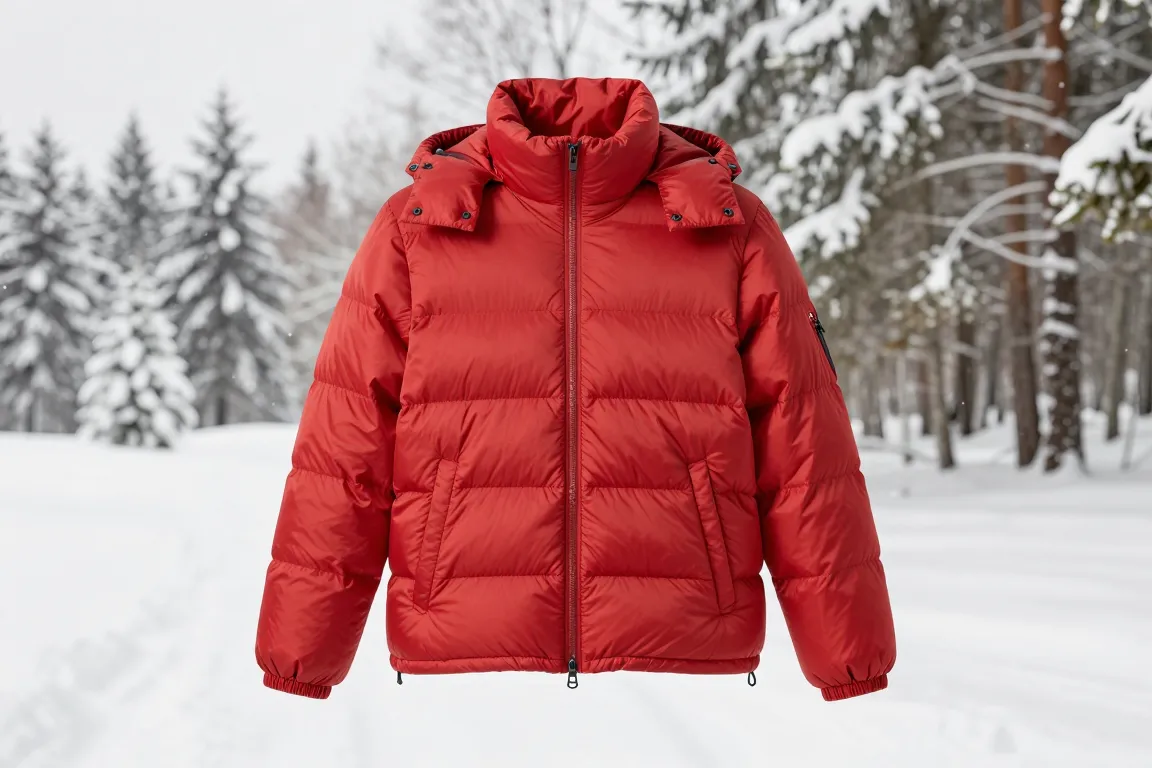
The jacket that holds a warm cloud of goose down in rows of stitched cells; Eddie Bauer made the first one in Seattle in 1936.
Core thesis
Warmth comes from trapped air. Sew the down into baffles that stop it from sliding, and the jacket gives the most heat for the least weight.
Design principles
- Sew the cells in rows 8 to 15 cm wide, so that the down cannot move to the bottom.
- Fill each cell with 90 to 230 g of goose down, by the cold that the jacket must meet.
- Choose a shell of 20 to 70 g per square metre that is tight enough to hold the down.
- Bind the cuff and the hem with elastic, to seal the warm air in.
- Cut the hood and the collar to close over the chin.
- Add a zip with a storm flap that covers the draught.
- Stitch each baffle through to a wall, not to the shell, to remove cold spots.
Anti-patterns
- A thin, loose shell that leaks down
- Stitch lines that run through with no baffle wall
- A wet, flat jacket that has lost its loft
- Bare, uncovered seams at the elbow
- A short jacket that leaves the kidney bare
Palette
Lineage
- Evolved from
- Early mountaineering
Use it
SKILL.md · tokens.css · source JSON · open in the demo