cuisine · 1500–1650 · also: Scappi cuisine, Italian court banquet
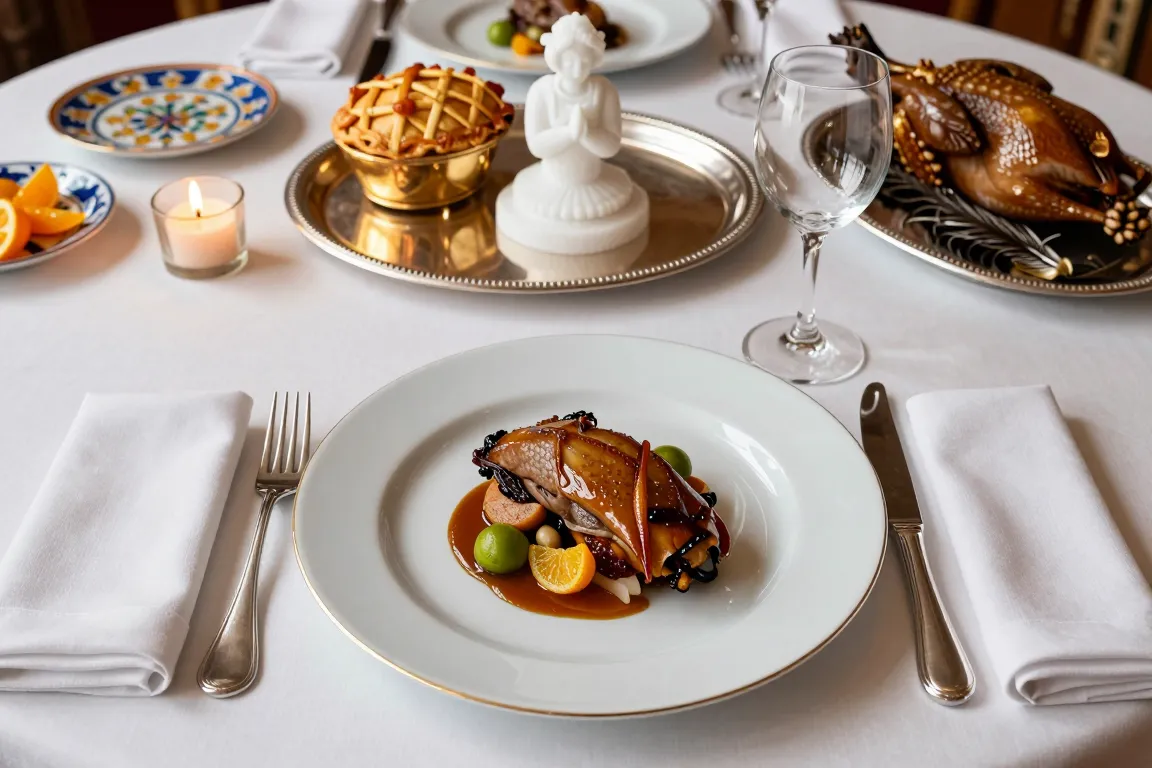
The feast of the Italian court as Bartolomeo Scappi set it down in 1570. A kitchen of many cooks sends out many dishes at once: pies, roasts, candied fruit and sculpture in sugar. The cook uses the fork, the sugar and the spit with great skill.
Core thesis
Show the power of the host with the number, the skill and the beauty of the dishes, and let sugar and pastry take the shape of buildings and beasts.
Design principles
Set three or four services of up to 30 dishes each, and set them in a pattern on the table.
Use sugar in the savoury dish and in the sculpture: marzipan, comfits and candied peel.
Bake game and meat in a pastry case, and decorate the case with a pattern of dough.
Roast on the spit with a sauce of citrus juice, and dress a roast bird in its own feathers.
Carve the roast at the table; a carver trained in the art cuts each bird.
Lay a fork, a knife and a spoon at the place of each guest, and a clean napkin.
Keep a clean and ordered kitchen: Scappi draws every tool and every station.
Anti-patterns
A sauce thickened only with bread and heavy spice
A plain dish without decoration
A single course on a bare table
Chilli, potato or maize in a banquet dish
A sauce of roux and butter in the French style of 1651