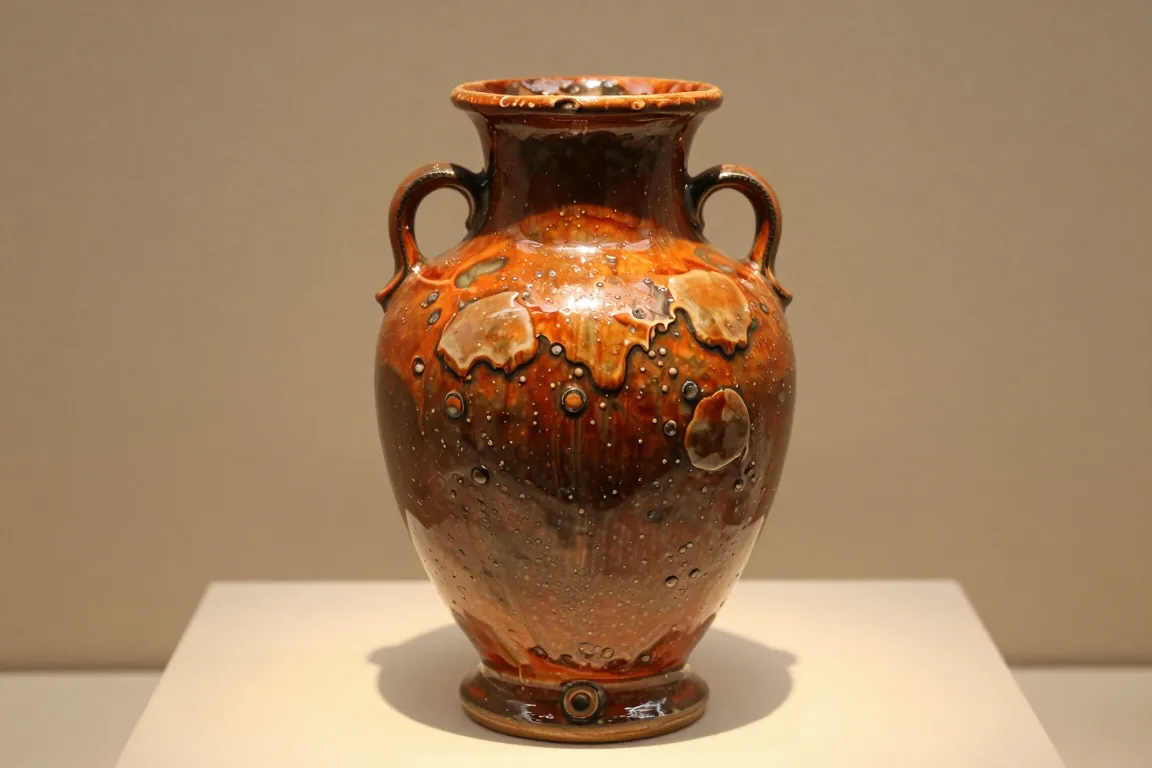
ceramics · 1960–1980 · also: Fat lava ceramics, West German pottery, WGP vases
Vases and bowls from West German factories between 1960 and 1980. A thick, bubbled and cratered glaze runs over a moulded earthenware body, in orange, brown, green or yellow.
Core thesis
A thick glaze that is allowed to run, bubble and crater gives a mass-made vase the look of cooled volcanic rock.
Design principles
Mould the earthenware body in a bold, round or flared shape with a wide opening.
Apply the lava glaze in a layer of 1 to 3 mm, and add a second thinner glaze over it.
Let the glaze run and crater, so that no two vases are the same.
Choose a bright ground: orange, yellow, green or brown, with a white or black drip.
Make large floor vases of 40 to 60 cm and table vases of 15 to 30 cm.
Add a relief of rings, bands or bubbles in the mould, to give the glaze a place to pool.
Fire at 1000 to 1100 °C in a tunnel kiln.
Mark the base with the factory name, a model number and a height in cm.