internet · 1988–1996 · also: Cyber-psychedelia, Cyberdelic, Rave cyberpunk
The psychedelic side of early cyberculture. It joins cyberpunk with acid colour: fractals, kaleidoscopes, posterised Photoshop collage, early 3D type and rave flyers. It takes its name from the club in the film Hackers (1995).
Core thesis
The computer is a consciousness machine: use acid colour, fractal repetition and raw early software effects to show a mind that has gone into the network.
Design principles
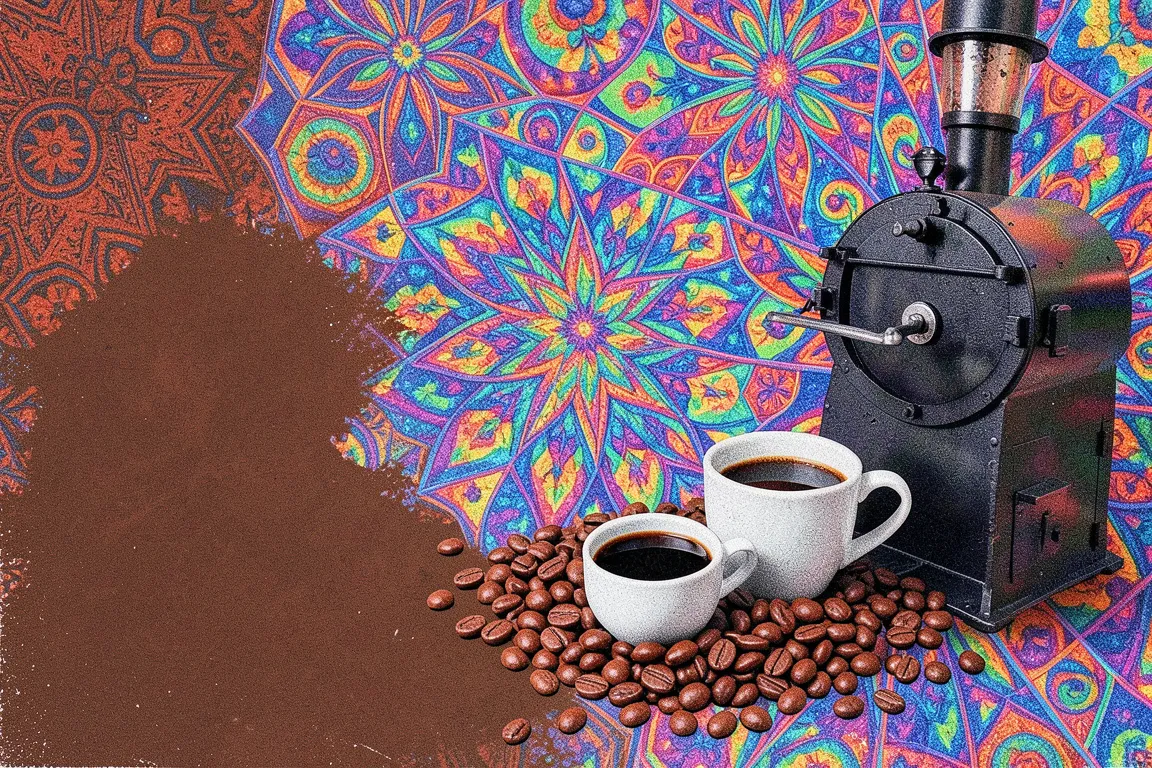
Fill the ground with a fractal or kaleidoscope tile that repeats 6 or 8 times around a centre, at 40% to 60% opacity.
Set a palette of 4 acid hues (#FF2BD6, #19F0FF, #B6FF1A, #FF8A00) on a deep violet ground (#12002B).
Use gradients with hard bands: posterise to 5 to 7 steps, and never blend smoothly.
Set display type in extended, outlined or 3D-extruded letters at 72px or larger, with a 4px offset copy in a second hue.
Collage cut-out photographs with a 2px white keyline and a posterised colour wash at 60% opacity.
Rotate accent elements by 3° to 12° and overlap layers by 16px to 48px.
Keep body text on a solid dark block of 90% opacity at 16px with contrast of 7:1 or more.