ceramics · 1800–1837 · also: English bone china, Spode bone china, Regency porcelain
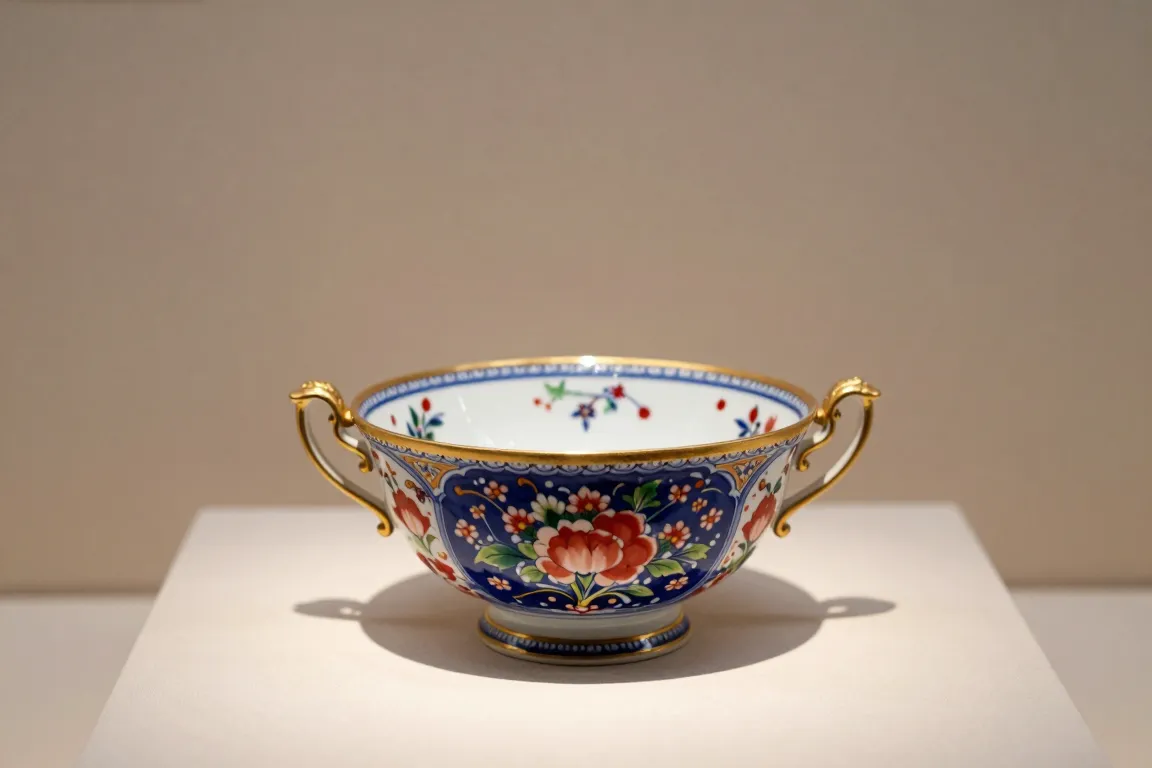
Bone china with rich painting and heavy gilding for the houses of the Regency. The body has about 40 per cent bone ash, so it is strong, white and translucent, and it carries bold Imari patterns, botanical flowers and wide gold bands.
Core thesis
Bone ash gives English potters a strong, white and warm body at a fair price, and they cover it in colour and gold to match the rich rooms of the Regency.
Design principles
Mix about 40 per cent calcined bone ash with china stone and kaolin for the body.
Fire the biscuit at 1250 °C and the glaze at about 1050 °C, so that the ware turns white and translucent.
Paint patterns in the Imari manner: dark blue under the glaze, then red and gold over it.
Paint flowers from botanical plates in the well of a dessert plate, one flower for each plate.
Gild the rim with a band 5 to 10 mm wide, and add a gold line round the foot.
Model the handles as leaves, scrolls or animal heads, and gild them.
Make a dessert service of 40 or more pieces, each with its own painted scene.