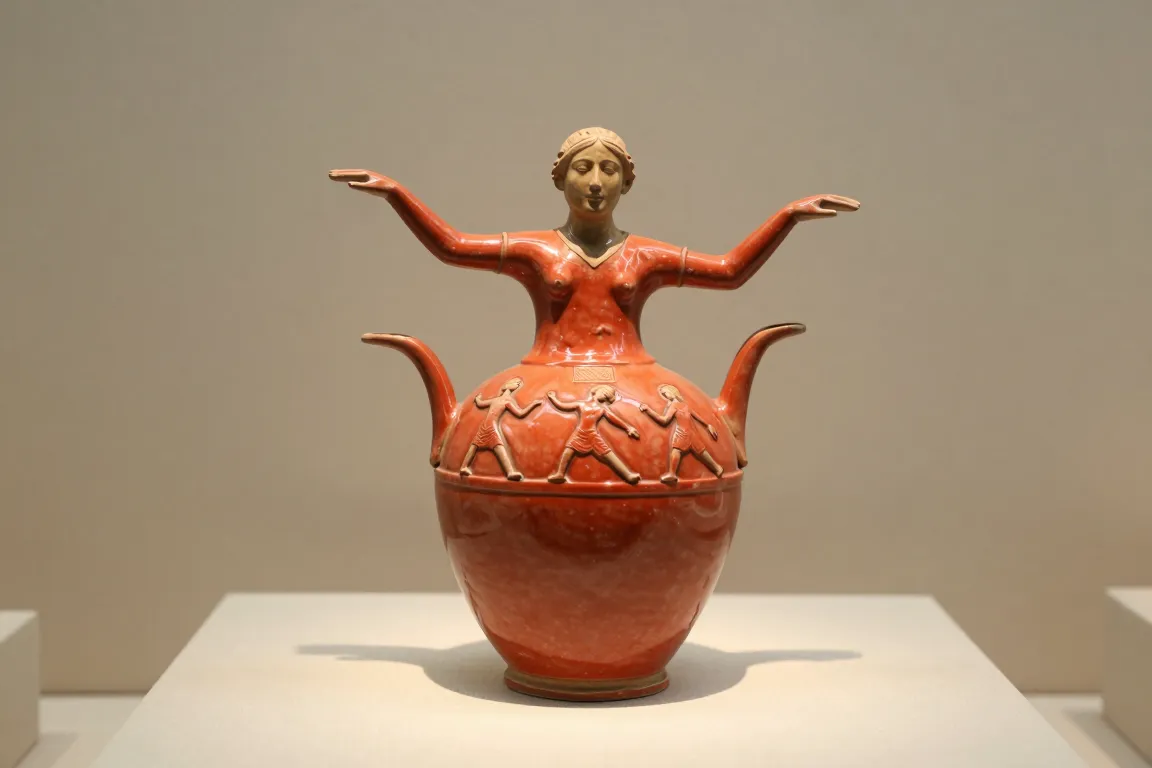
Red-gloss tableware of the Roman world. Potters at Arezzo press fine clay into stamped moulds, coat the pieces with a slip of very small particles, and fire them to a glossy coral red.
Core thesis
A fine slip, not a glaze, gives the red shine: the potter sorts the clay by particle size, paints the thin top layer on the pot, and fires it in clean air.
Design principles
Settle the clay in water and keep only the finest top layer, with particles under 1 micron, for the slip.
Coat the leather-hard pot with 1 or 2 thin layers of slip and polish it with a soft cloth.
Press the bowl into a fired clay mould that carries the relief in reverse; the mould keeps the design sharp.
Stamp the maker name in a small cartouche in the well of the plate.
Give each form a fixed number in a catalogue, so that a buyer in any province can match the set.
Fire the ware in clean oxidising air at about 1000 °C, so that the iron in the slip turns red.
Stack the pieces in a large kiln in columns, with a ring of clay between them, to fire 10 000 or more at once.
Anti-patterns
A glass-like glaze that fuses with the body and hides the clay
Black or grey patches from smoke in the kiln
Painted scenes with an outline brush on the red ground