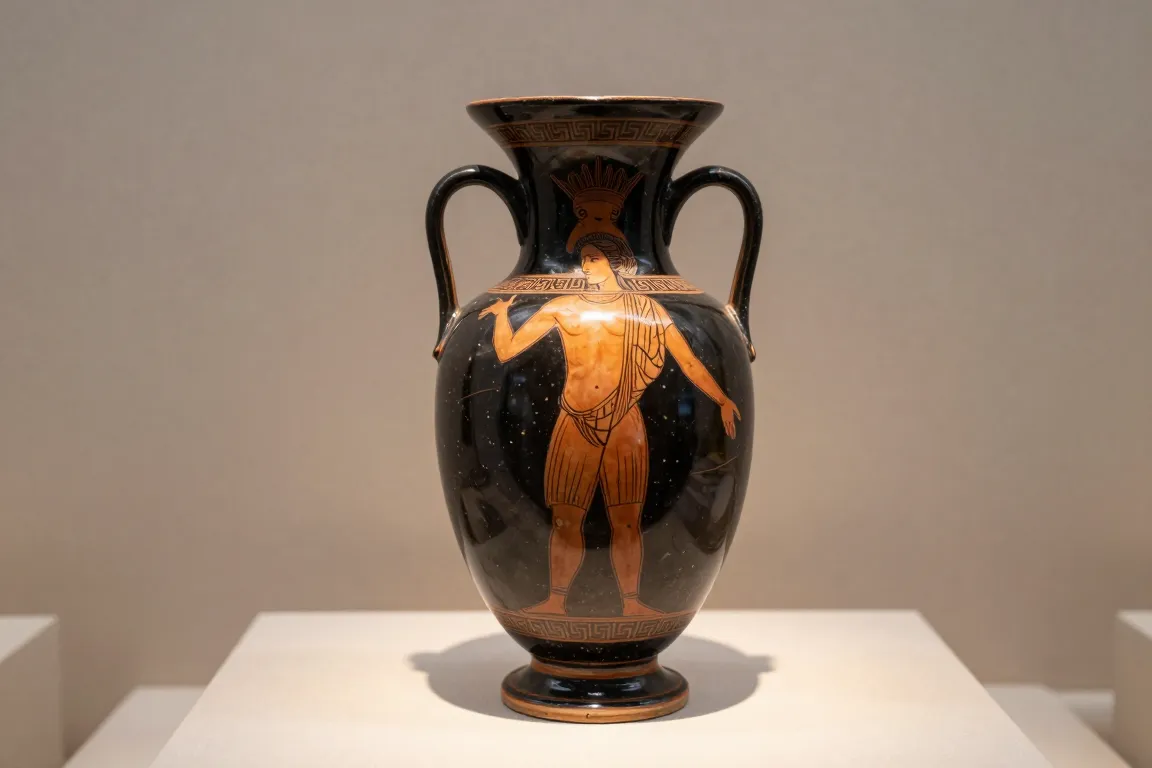
ceramics · c. 530–320 BC · also: Attic red-figure, Red-figure vase painting
Greek vases in which the background is black gloss and the figures keep the red of the clay. The painter draws the inner lines with a brush, so the figures look rounder and freer.
Core thesis
A vase is a field for the drawn human body: the figure stays the colour of the clay and the brush line gives it weight, movement and feeling.
Design principles
Reserve the figures in the red clay and paint the whole ground in black gloss.
Draw the inner lines with a brush in relief lines, thick and raised, for the main contours.
Use thinner dilute lines for muscles, hair and folds of cloth.
Show the body in three-quarter view, twisted and foreshortened.
Frame the picture with a meander or a palmette border, and a plain black wall below.
Place one or two figures in the tondo of a cup so that the circle holds the pose.
Fire in three stages, oxidation, reduction and re-oxidation, to fix black and red.
Anti-patterns
Black silhouettes with incised detail on a red ground