English bespoke tailoring
fashion · 1800–present · also: Savile Row tailoring, London cut, The English drape
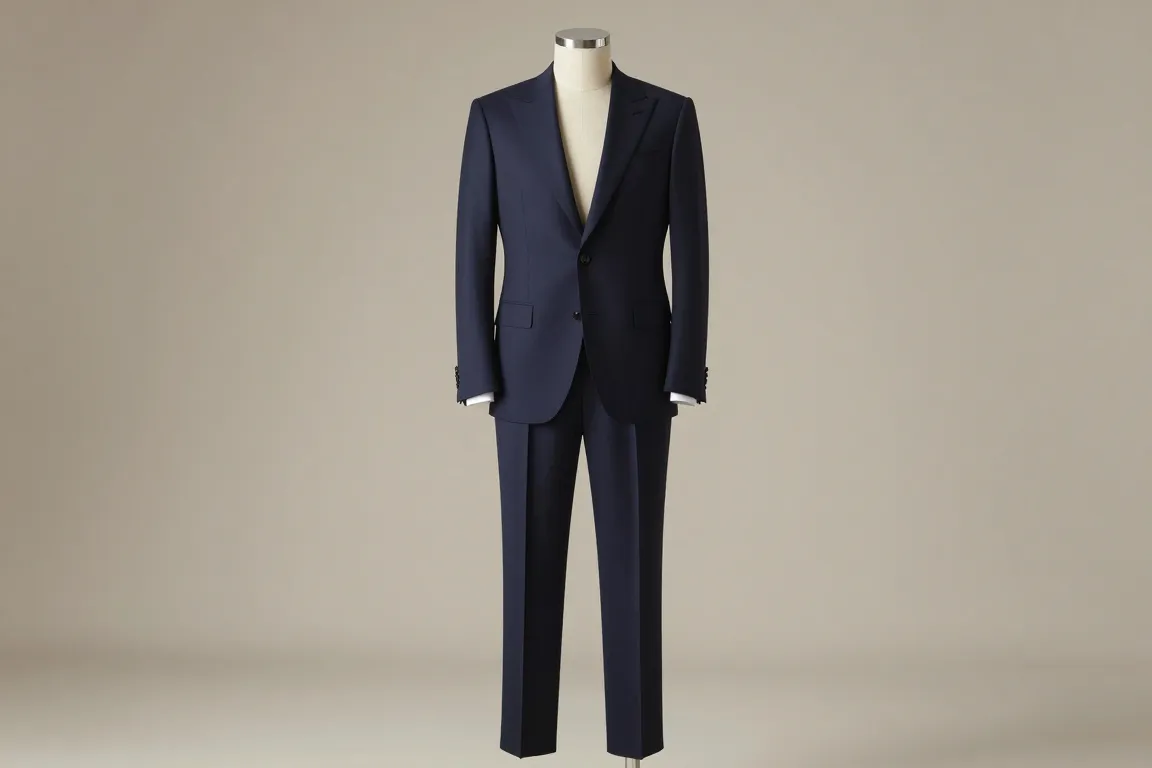
The cut of the London tailor: a plain, dark suit in fine worsted, drafted for one body and built by hand on hair canvas.
Core thesis
A man's suit is drafted for one body, built inside with canvas, and shown outside by a plain surface and a line with no fuss.
Design principles
- Draft the pattern from 20 or more measures, and cut it by hand from a single length of cloth.
- Baste a first fitting, then a forward fitting, then a finished fitting; allow 50 or more hours of work for a suit.
- Build the chest on a canvas of horsehair and wool, pad-stitched by hand to hold the roll of the lapel.
- Cut the coat with a clean chest and a gentle drape, and a waist that is lightly suppressed.
- Set the sleeve head with a small roped or natural edge; sew the buttonholes by hand.
- Choose a dark, plain cloth of 280 to 400 g per metre: navy, charcoal, grey.
- Keep the trousers high at the waist, with pleats, a straight leg and a turn-up.
Anti-patterns
- A boxy, ready-made block with no fitting
- Glued fusible interlining in the chest
- Loud, shiny or stretch suiting
- A tight, short, cropped jacket
- Padded, square shoulders with a hard edge
- Visible logos or large buttons
Palette
Lineage
- Echoes
- Georgian neoclassical manufacture
- Evolved into
- Country sporting tweed, Ivy style, Mod and mini, Power dressing, Stealth luxury accessory
- Hybridises with
- English welted dress shoe, Punk fashion, Quiet luxury fashion
- Provoked
- Americana workwear
- Rebelled against
- Rococo court dress
Use it
SKILL.md · tokens.css · source JSON · open in the demo