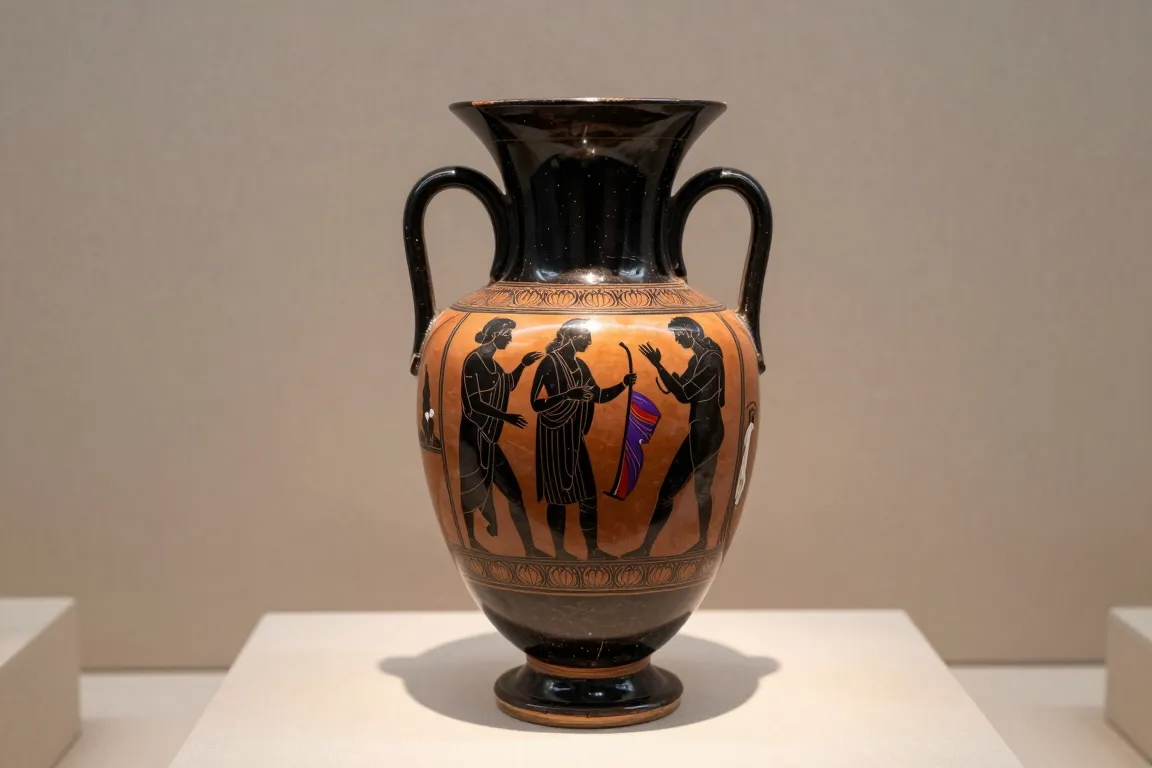
ceramics · c. 700–480 BC · also: Attic black-figure, Corinthian black-figure
Greek vases in which the painter draws figures in a black gloss slip on the red clay and cuts the details with a sharp point. A three-stage firing makes the black and the red.
Core thesis
A pot is a surface for story: black silhouettes on red clay, made sharp with incised lines, tell a myth in frieze after frieze.
Design principles
Paint each figure as a solid black silhouette in gloss slip on the red clay.
Incise the inner lines of the figures with a sharp point to show the red clay below.
Add purple-red and white slip for flesh of women, hair, and clothing accents.
Divide the pot into panels and friezes that run round the body in horizontal bands.
Fire in three stages: oxidation, reduction and re-oxidation, at 800 to 950 °C.
Keep the main scene on the shoulder or the belly, and a lotus and palmette band below the handles.
Write the name of the painter or the potter in a short line on the vase, when it is signed.
Anti-patterns
Red figures on a black ground
Soft shading or colour blends inside the figure
A glaze that covers the whole pot with a clear gloss