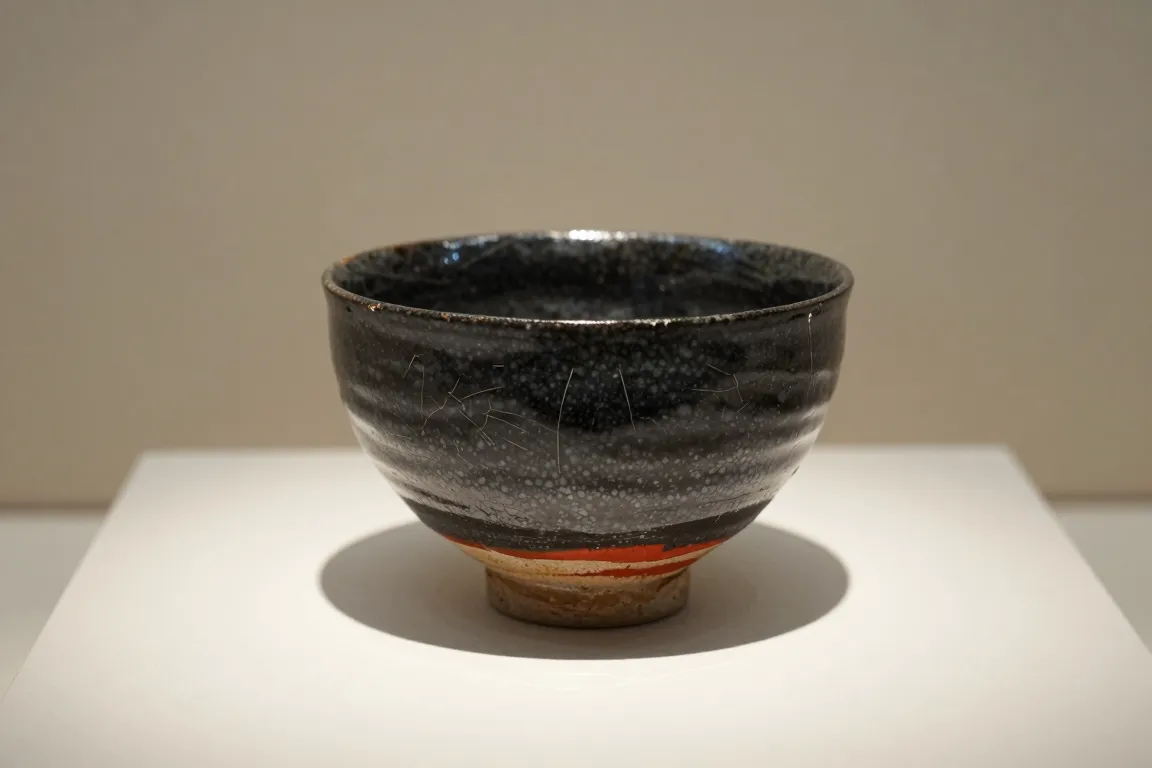
ceramics · 1580–1700 · also: Raku ware, Black raku, Red raku, Chōjirō tea bowl
Hand-built, low-fired tea bowls that Chōjirō made in Kyoto for the tea master Sen no Rikyū. The potter pulls each bowl from the hot kiln, and the glaze is black or red.
Core thesis
A tea bowl need not be thrown, round or bright: hand-built, a little uneven and fired fast, it can calm the mind and ask nothing of the eye.
Design principles
Build the bowl by hand from a coil or a pinched ball of clay; do not use the wheel.
Cut the shape with a bamboo knife until the wall is 8 to 12 mm thick and fits the palm.
Make the bowl sit low and heavy, with a flat or slightly concave base.
Cover the body with one lead glaze, black or red, in one colour.
Fire each bowl alone in a small kiln at 800 to 1000 °C and pull it out while hot.
Leave a trace of the hand: a dent, a spatula cut or a slight lean.
Make a black bowl for the tea master and a red bowl for the guest.
Keep the bowl plain, so that the tea and the room are the show.