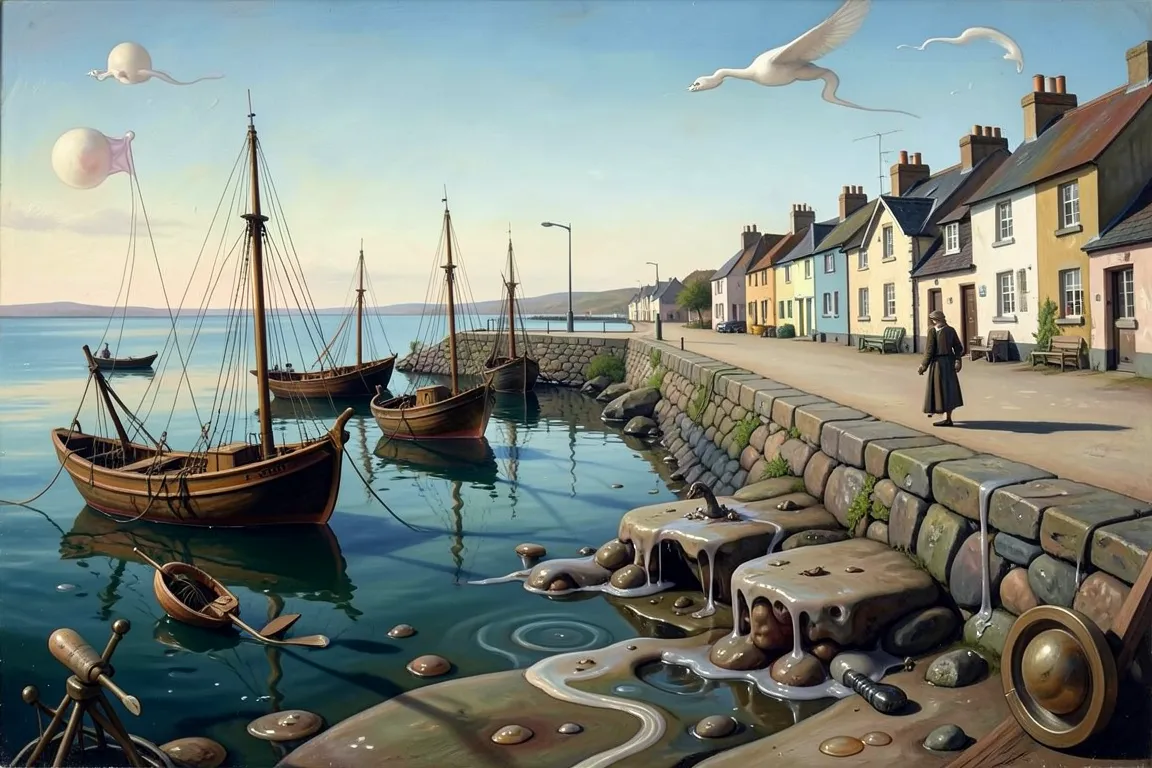
Dream pictures in a clear, exact style: real objects in impossible places, meetings and changes of scale. The detail is precise and the logic is wrong, so the image feels both real and strange.
Core thesis
A picture can show the mind below reason, and so it joins plain, exact things in a way that no waking logic allows.
Design principles
Paint each object with exact, plain detail, as in a photograph, and make the meeting of objects impossible.
Place the scene in a wide, empty, deep space: a low horizon at 25–35% of the height and a long, clear perspective.
Change the scale on purpose: an object 3 to 10 times too large or too small against its neighbour.
Melt, split or combine forms: a soft clock, a body of drawers, a bird that is a leaf.
Use a cool, calm, even light with long, hard shadows, as at dusk or in a dream.
Keep the surface smooth and the touch hidden, so that the strange image looks real.
Give the picture an enigmatic title that does not explain it, and leave one object unresolved.
Anti-patterns
A logical, explained scene that has a clear story
Loose, gestural paint that draws attention to the hand