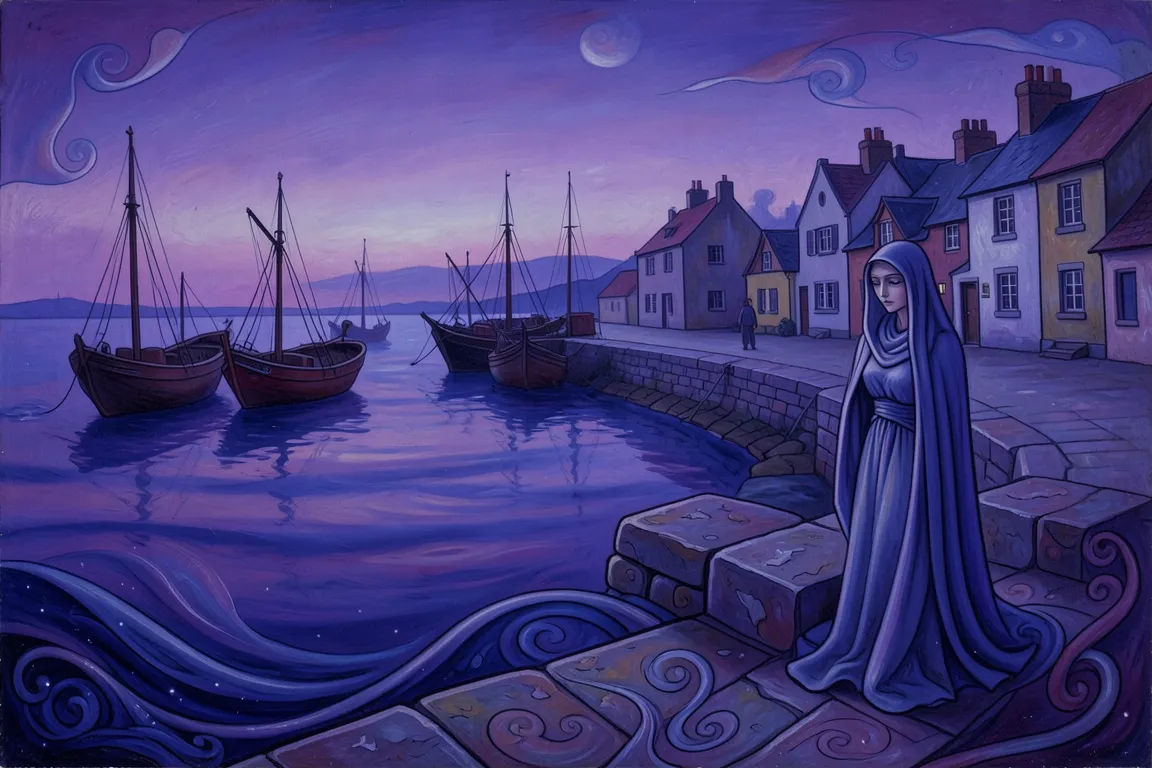
painting · 1886–1910 · also: Symbolist painting, Fin de siècle dream
Pictures of dream, myth, death and desire, in which a figure or a form stands for an idea. The mood is quiet, strange and inward; line and colour are chosen to suggest, never to explain.
Core thesis
A picture should suggest an inner idea by symbol and mood, and should turn from the plain surface of the visible world toward dream and the spirit.
Design principles
Show an idea by an image: a sphinx, a flower with a face, a floating head, a veiled woman, a dark pool.
Keep the space shallow and still, with a flat, decorative field of 40–60% behind the main figure.
Set the figure in the centre or on a clear axis, and hold it motionless, with a closed or far-off gaze.
Use a limited, dim, jewel-like palette: violet, deep blue, gold and green, with pale flesh and a dark ground.
Draw a long, soft, flowing line of 2–6mm and let the contour curve like a stem or a hair.
Blur the edges in mist and dusk, and blend the light into a glow without a source.
Leave one thing unexplained: a title, a gaze, or an object that has no place in the scene.