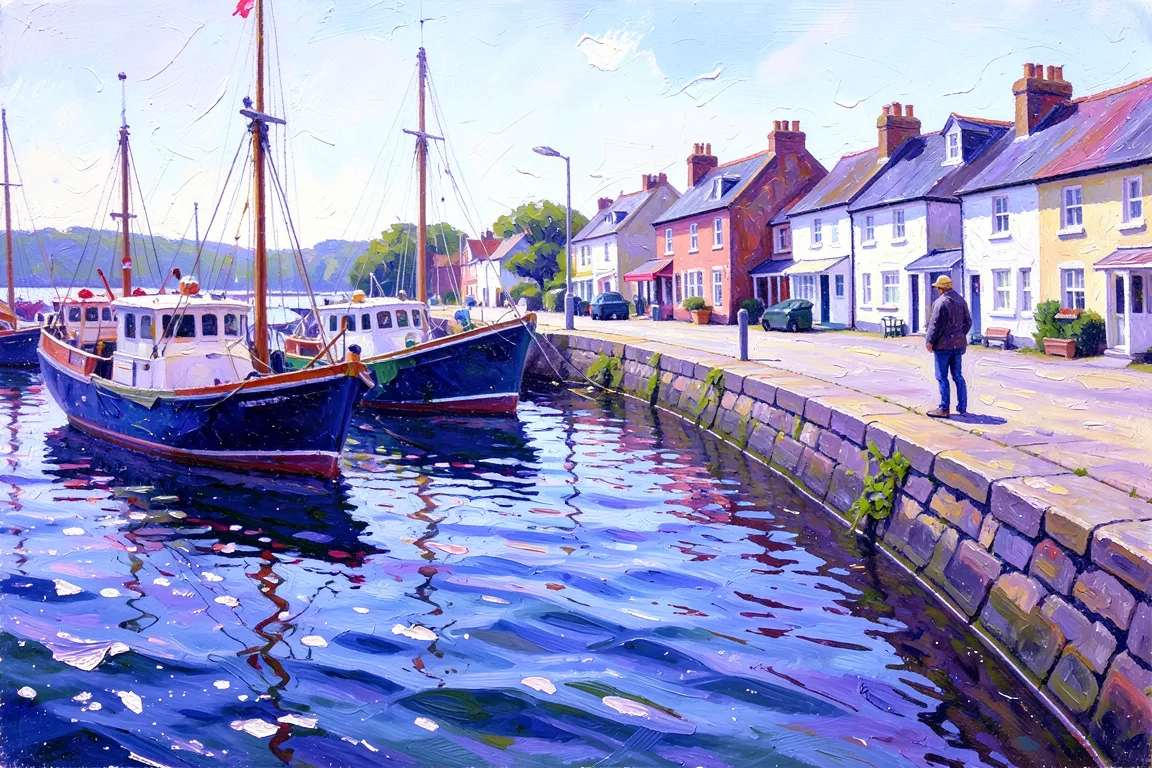
Painting of the first look: quick, broken strokes of pure colour that record changing light on a modern scene. The painters work outdoors, drop the outline and the black shadow, and let the viewer's eye mix the colour.
Core thesis
A picture records the impression of light on a surface at one moment, not the object as it is known to be.
Design principles
Paint the scene in one session of 2 hours or less, so that the light is the same across the canvas.
Apply colour in separate, visible touches of 5–20mm and let them mix in the eye at a distance.
Paint shadow in colour: use blue, violet or green at the same value as the lit ground, and use no black.
Set the value range narrow: most of the picture sits within 3 or 4 steps of a 10-step scale.
Put complementary pairs side by side (orange and blue, red and green) to make the vibration of light.
Crop as a snapshot: let the edge cut figures and objects, and place the horizon high or low.
Choose modern leisure as the subject: boulevards, rivers, gardens, stations and cafés.
Anti-patterns
Black outlines or hard contours around forms
Black or brown studio shadows
A smooth, blended, invisible surface
Dark, low-key ground and a single dramatic beam of light