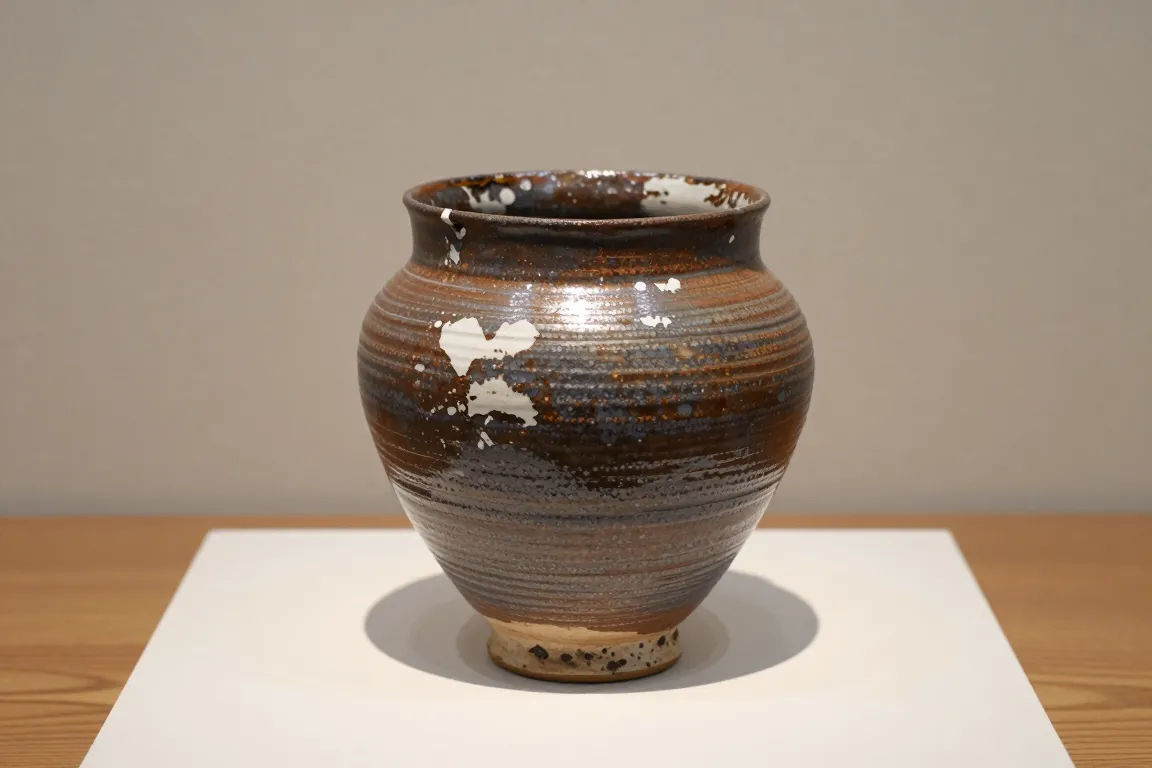
ceramics · 1926–1975 · also: Mingei pottery, Japanese folk craft movement, Mashiko ware
A Japanese movement that began in 1926. Yanagi Sōetsu and the potters Hamada Shōji and Kawai Kanjirō praised plain pots by unknown village potters and made new pots of the same kind.
Core thesis
The most beautiful pots are the plain tools of daily life that anonymous craftspeople make in large numbers, with local clay and no wish for fame.
Design principles
Use the local clay and the local glaze material of the village, within 10 km of the kiln.
Make strong, useful forms: jars, bottles, bowls and large dishes that can stand daily use.
Throw quickly and with confidence, and do not correct the small errors of the form.
Paint with a wide brush, in 3 to 6 strokes, in iron brown or blue.
Pour or dip the glaze in a few motions, and let it overlap and run.
Use plant-ash, kaki and nuka glazes, fired at about 1250 °C in a wood-fired climbing kiln.
Make the same form many times, and do not sign it as art.
Put the pot into daily use: for tea, rice, pickles and flowers.
Anti-patterns
A polished, perfect form that shows an artist's ego