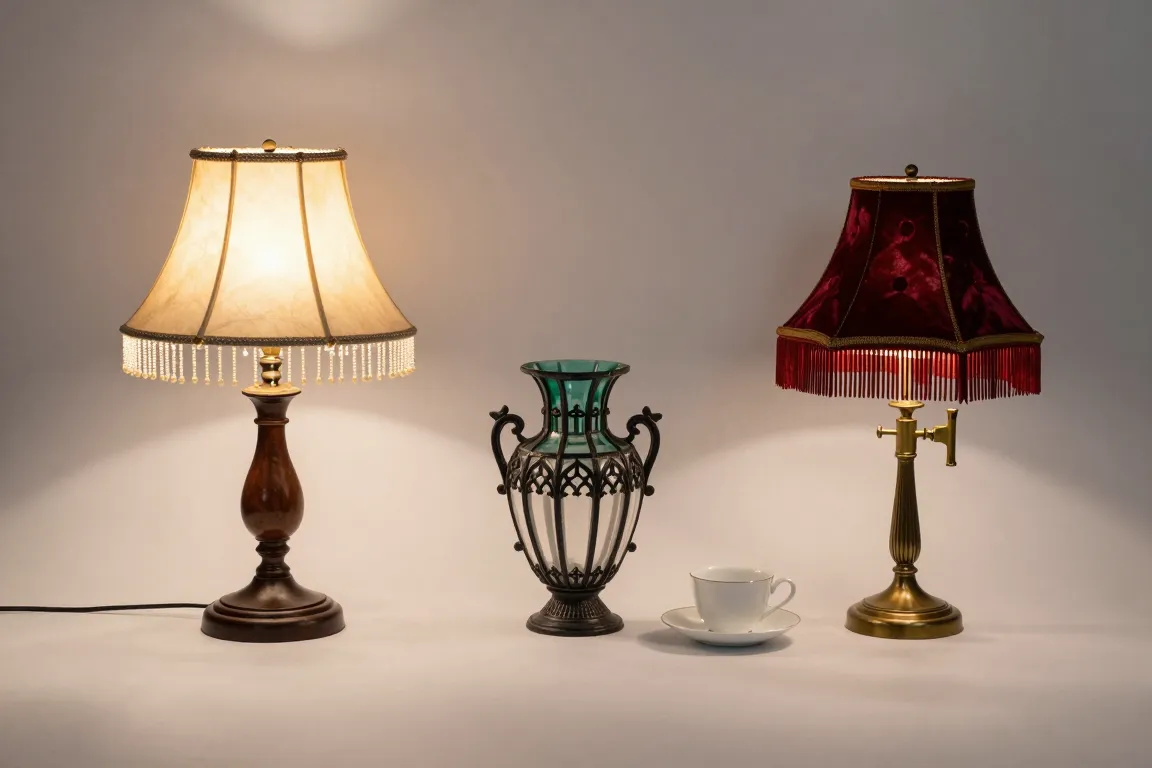
industrial · 1840–1900 · also: Victorian mass-produced goods, High Victorian household design, Great Exhibition style
The household goods of the machine age in Britain: cast iron, pressed glass, deep-buttoned velvet and dark polished wood, with ornament added to each surface by the machine.
Core thesis
The machine makes ornament cheap, so each object can carry rich pattern, deep colour and heavy form as a sign of comfort and rank.
Design principles
Cover each large surface with ornament: a turned, carved, moulded, pressed or printed pattern.
Use dark, deep polish on mahogany, walnut and oak; the gloss is 60 to 85 GU.
Use cast iron for stoves, baths, stands and fences, and cast the pattern in the mould.
Make a seat deep and soft, with buttoned velvet and a fringe of 5 to 10 cm.
Use pressed glass with a repeat pattern and coloured glass for lamps and vases.
Use 3 or 4 saturated colours in one room: crimson, bottle green, dark blue and gold.
Make each object with a heavy base and a rich top, so that it looks solid and costly.